
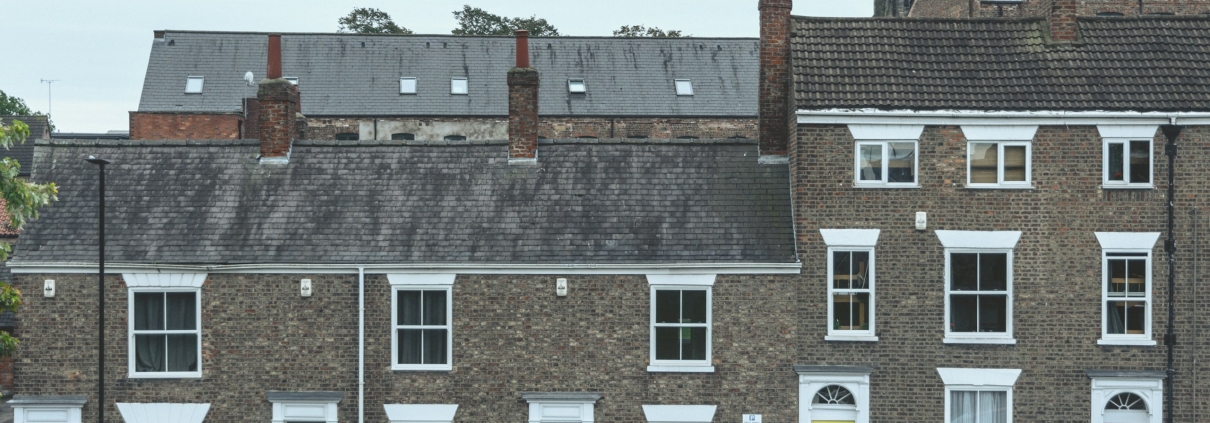
Almost everything written about leasehold homes in British Columbia explains the same thing: you own the building, not the land. That sentence is repeated on dozens of pages, and on a leasehold strata it is not correct. A regulator published it too.
Here is what the law actually says. On a leasehold strata plan the landlord holds the registered title to each strata lot — the home, not merely the ground under it — and you are registered in the land title office as the tenant under a lease of that strata lot. What you buy and sell is that registered leasehold interest. It can be mortgaged and it carries charges, so it behaves like ownership in daily life. It is still a lease, and it ends.
The question that decides whether a leasehold home is a good buy is not “do I own the land”. It is “what happens at the end, and who sets the price”. The answer is not in the listing, and it is not in the Form B that every buyer orders. It is in a one-page form filed at the land title office when the building was created, and in your own lease. This page shows you where both are, what the statute guarantees you, and what it leaves entirely to the contract.
The short version
- You are not an owner on title. On a leasehold strata the registrar must register the title to each strata lot in the landlord’s name. You are registered as the tenant under a strata lot lease.
- The landlord must buy you out at the end — but the lease sets the price. The purchase is mandatory. The amount is whatever your lease or a filed schedule says, and the Province warns that a lease may set it at zero.
- That price lives in a prescribed one-page form called Form O, filed at the land title office when the building was created. Almost nobody tells buyers it exists. Order it before you make an offer.
- If the lease and the schedule are both silent, the statute falls back to fair market value “as if the strata lot lease did not expire” — and then says to value it “in accordance with the regulations”. I could find no regulation that says how.
- Buying in with under thirty years left is exempt from property transfer tax. Over fifty years left and you pay on the full freehold value of the home.
- Your property tax is not discounted as the lease runs down. The Assessment Act expressly says the length of your interest, and the landlord’s right to end it, are not restrictions the assessor takes into account.
- Financing is a real constraint with published rules. One mortgage insurer requires the lease to be at least five years longer than your amortization, and to contain a buy-out price to convert to freehold.
- You get no three-day rescission right. Leasehold is excluded twice over. On a new build from a developer you get a different and longer right instead.
On this page
- There are two completely different things called “leasehold”
- Who is allowed to be a leasehold landlord
- What your title search actually shows
- What happens at the end of the lease
- Form O: the form that sets your end-of-lease payment
- What the usual documents tell you, and what they do not
- Property transfer tax on a lease
- Property tax and assessment: the part that surprises people
- The home owner grant
- Getting a mortgage on a leasehold
- What rights you have, and the ones you lose
- What happened when real leases came up for renewal
- Mistakes that cost money
- Questions people actually ask
- What I could not confirm, and did not print
There are two completely different things called “leasehold”
Two homes can both be advertised as “99-year leasehold” and be governed by entirely different law. Which one you are looking at decides whether you have any statutory protection at all.
A leasehold strata is created under Part 12 of the Strata Property Act, sections 199 to 216. A “leasehold strata plan” is defined there as “a strata plan in which the land shown on the strata plan is subject to a ground lease”. If your home is one of these, you get a renewal procedure, a mandatory buy-out at the end, protection from eviction, and arbitration if you cannot agree on rent. Those are real rights and they are set out below.
A long-term residential lease that is not a strata gets almost none of that. The Province states plainly that “Long term residential leaseholds are NOT governed by the Residential Tenancy Act” and that “Residential leasehold properties are NOT governed by the Strata Property Act”. There is no statutory renewal right, no statutory obligation on the landlord to buy you out, and no strata corporation. What you have is the contract and whatever the Real Estate Development Marketing Act gave you on the first sale.
So the first question to ask is not about the lease length. It is: is this a leasehold strata plan under Part 12, or not? Your conveyancer can answer it from the title in minutes. Ask before you write the offer, not after.
Who is allowed to be a leasehold landlord
Part 12 is not available to anyone who owns land. It is available only where the landlord falls inside a closed list, and this is where most writing on the subject goes wrong.
Section 199 defines a “leasehold landlord” by listing who qualifies. The list opens with “the government of British Columbia, the government of Canada, a municipality, a regional district”, goes on to name several other specific bodies, and ends with “another public authority as defined by a regulation made under this Act”. Read the section itself for the complete list rather than relying on any summary. That final limb is filled in by section 12.1 of the Strata Property Regulation, which sets out eight entries: universities under the University Act, boards of education under the School Act, the Provincial Rental Housing Corporation, and five further named entities, four of which are British Columbia companies.
The common error is to say that privately owned land cannot be a leasehold strata. That is not the test. Four of the entries in section 12.1 are private British Columbia companies, added to the regulation over time. Land held by one of them in fee simple can carry a Part 12 leasehold strata plan. The test is not whether the landlord is a government. The test is whether the landlord is on the list.
The list changes by regulation — two entries were added in 2024 — so check the current section 12.1 rather than any article, including this one. The Province’s own summary of the same point is that “only certain public authorities are designated as strata leasehold landlords and authorized to develop strata leaseholds”.
One more gate worth knowing: under section 201, the registrar cannot accept a leasehold strata plan unless “the unexpired term of the ground lease is at least 50 years after the date of the application to deposit the leasehold strata plan”. So these buildings start with at least fifty years on the clock. Ten or twenty years later, that is no longer what you are buying.
What your title search actually shows
Order the title. It will not say you are the owner.
Section 202 of the Act is short and leaves no room: when a leasehold strata plan is deposited, the registrar must “register new indefeasible titles in the name of the leasehold landlord for each of the strata lots shown on the plan”. Not the land — the strata lots. The Province says the same thing in plain English on its strata leaseholds page: “The freehold title to the strata lots is owned by the public authority, subject to the leasehold interests of the strata leaseholders.”
Your interest is the other half of that sentence. Section 199 defines a “leasehold tenant” as a person “registered in the land title office as a tenant under a strata lot lease”. That registered interest is a real property interest: it can be mortgaged, and section 216 contemplates charges existing against it. So you are not a tenant in the ordinary sense. You are also not on title as an owner.
Why this matters in practice: several widely-read pages, including a practice resource published by the BC Financial Services Authority, tell buyers that strata owners “own the building but not the underlying land on which it is built”. For a Part 12 leasehold strata that is wrong, because the landlord’s title is title to the strata lot itself. If you are relying on that sentence to work out who insures what, who can mortgage what, or what you are selling when you sell, you are working from the wrong picture. Read section 202 and read your title.
A title search at the Land Title and Survey Authority costs $11.06 on the fee listing current as at April 1, 2026. It is the cheapest money you will spend on this decision.
What happens at the end of the lease
This is the whole question, and Part 12 answers it with a real procedure and real deadlines. The procedure is strong. The price is not protected at all.
Section 210 puts the renewal decision entirely in the landlord’s hands: “A strata lot lease may be renewed at the option of the leasehold landlord.” You have no matching option. But the landlord cannot simply let the clock run out in silence, and the detail of that is the most useful thing on this page.
| Step | What the Act requires | The deadline | Section |
|---|---|---|---|
| Landlord must tell you | Written notice that it has elected to renew, or not to renew | “at least one year before the expiry of the strata lot lease” | 210(3) |
| Landlord says nothing | The landlord “must renew the strata lot lease for a term of 5 years”. Silence is not an exit. | Automatic | 210(4) |
| If it does renew | Renewal “must be for a term of at least 5 years”, on the same terms except the term and the rent | — | 210(2), 211(1) |
| New rent | A share of the market rental value of the land only, “excluding all buildings and improvements”, split between the strata lots by assessed value | By the start of the renewal period, unless the lease says otherwise | 211(2), 211(3) |
| If you cannot agree on rent | “the rent must be determined by arbitration under the Arbitration Act” | — | 211(4) |
| If it does not renew | The landlord “must purchase the leasehold tenant’s interest in the strata lot” | — | 210(5), 214(1) |
| The price | Whatever basis the lease or a filed schedule sets. Only if both are silent does fair market value “as if the strata lot lease did not expire” apply. | Arrived at as of the termination date | 214(2) |
| If you cannot agree on the price | Arbitration under the Arbitration Act | If not agreed by 30 days before expiry | 214(4) |
| Payment | The landlord must complete the purchase | Within 30 days of the agreed or arbitrated date | 214(5) |
Read the “price” row again, because it is the row that decides everything. The buy-out is mandatory: section 214(1) says the landlord “must purchase”. But section 214(2)(a) says the price is “the price calculated on that basis” where a basis “was set out in the strata lot lease or in a schedule filed with the leasehold strata plan”. The generous-sounding fallback in section 214(2)(b) — fair market value “as if the strata lot lease did not expire” — applies only “if a basis for calculating the purchase price was not set out” in either place.
That is why the Province can say, on its current page and without contradicting the Act: “Please be advised, however, that there may be no compensation at the end of the lease, as the lease agreement may set the compensation to $0.” A mandatory purchase at a contractual price of zero is still a mandatory purchase. The only number that matters is the one written into your lease or the filed schedule.
One protection on that number is worth knowing. Under section 214(3) the landlord can change the basis set out in a filed schedule only if the leasehold tenants “consent to the change by a resolution passed by a unanimous vote” and an amended schedule is filed in the land title office. So a formula cannot be worsened mid-stream without every single tenant agreeing.
And the landlord cannot pick and choose. Section 212 makes an election to renew fewer than two-thirds of the leases “ineffective” unless it first notifies every tenant which leases will and will not be renewed, and every tenant whose lease is being renewed consents in writing to that. In other words, renewing a favoured minority requires the favoured minority’s own written consent.
Form O: the form that sets your end-of-lease payment
If the price is whatever the lease or “a schedule filed with the leasehold strata plan” says, the obvious next question is: which schedule, and where is it? Nobody seems to tell buyers. Here is the answer.
The Strata Property Regulation prescribes a form called Form O, “Leasehold Strata Plan Schedules”. Its heading cites the two sections that matter: “(Sections 206, 214)”. It is filed in the land title office when the strata plan is deposited, and it is one page with exactly two things on it:
- “The restrictions imposed on the lease, assignment or occupancy of the strata lots under sections 206 of the Strata Property Act are as follows:” — the rules on renting out, selling and who may live there.
- “The purchase price of each strata lot under section 214 of the Strata Property Act is to be calculated as follows:” — your end-of-lease payment, or the formula that produces it.
That second line is the single most important sentence in a leasehold purchase, and it is a fill-in-the-blank on a one-page form that has been sitting in the land title office since the building was registered. It is not in the listing. It is not in the Form B. It is not in the depreciation report. Ask your conveyancer or lawyer to pull the leasehold strata plan and its Form O schedules, and read that line, before your subject removal date.
Read the restrictions line too. Section 206 says a restriction on leasing, assignment or occupancy “has no effect unless it is set out in a schedule of restrictions and filed in the land title office at the time the strata plan is deposited”. So an unfiled restriction is unenforceable — useful to know. But section 207(4) cuts the other way for you as a buyer: where the occupancy restrictions are amended, the amendment “does not affect persons who were leasehold tenants immediately before the amendment, but affects persons who become leasehold tenants as a result of the sublease or assignment of the strata lot lease after the amendment”. A resale buyer can inherit tighter restrictions than the seller ever lived under. Ask whether the schedule has been amended, and when.
The regulation that section 214 points to appears not to exist
This one is worth printing because it is an absence, and absences are usually hidden.
Where the lease and the schedule are both silent, section 214(2)(b) sets the price as fair market value “evaluated, in accordance with the regulations, as if the strata lot lease did not expire”. So the method is supposed to be prescribed. I read Part 12 of the Strata Property Regulation in full. It contains one section — section 12.1, the definition of “public authority” — and nothing else. There is no valuation method, no formula, and no reference back to section 214. Part 13 begins immediately after.
I am stating that carefully: I could find no regulation prescribing how that valuation is done. Proving a negative across the whole body of British Columbia regulations is harder than it looks, so treat this as “not found”, not as “does not exist”. Either way, the practical consequence is the same and it points in one direction: do not buy a leasehold on the assumption that the statutory fallback will protect your price. Get the number from Form O and from your lease.
What the usual documents tell you, and what they do not
Every strata buyer in British Columbia is told to order a Form B Information Certificate. On a leasehold it will not answer a single question about your lease, and that is not the strata corporation’s fault. The form does not ask.
Section 59 of the Act lists what a Form B must disclose, and the prescribed form sets it out as items (a) through (m). I read both. Neither the section nor the form mentions a lease, a ground lease, a strata lot lease, a leasehold landlord or a lease expiry date — and neither does the attachment list that follows the items. A leasehold tenant is entitled to request a Form B, and a Form B must be given to a person acquiring a strata lot lease. It simply contains nothing about the thing that will decide the value of your home.
| Document | Who gives it to you | What it says about your ground lease |
|---|---|---|
| Form B Information Certificate | The strata corporation, within one week of a request | Nothing. Items (a) to (m) and the attachments never mention a lease. |
| Depreciation report | Attached to the Form B, if the strata has one | Nothing about the lease. It is about the building’s components. |
| Property Disclosure Statement | The seller, usually | Ask your licensee to check the current form with you. I could not verify its leasehold content from a public source. |
| Title search | The land title office, for $11.06 | Names the landlord as registered owner, and your registered strata lot lease. |
| The strata lot lease itself | The land title office — it is a registered document | The term, the rent, and often the end-of-lease price basis. |
| Form O schedules | Filed with the leasehold strata plan at the land title office | The section 214 purchase-price calculation, and the section 206 restrictions. |
| Developer’s disclosure statement | The developer — on a new build only | Required to describe the lease and attach a copy. Not available on a resale. |
The pattern is clear. Everything that matters about your lease is in the land title record, and nothing that matters about your lease is in the strata document package. If your due diligence consists of reading the Form B, the minutes and the depreciation report — which is exactly what a careful buyer does on a freehold strata — you will have read nothing at all about the lease.
Property transfer tax on a lease
Yes, you pay it. And the rule has a feature that works strongly in favour of anyone buying into a lease that is well advanced — which is exactly when buyers assume they are being punished.
Under the Property Transfer Tax Act, a “taxable transaction” includes a transaction granting “a right to occupy land under a lease agreement”. So registering or taking a transfer of a lease is taxable in principle. The exemption is in section 14(4)(o), and the operative word is remaining:
“a transfer of a lease agreement, except a lease modification agreement, with a term of 30 years or less remaining as at the date of registration of that lease agreement”
So if you buy into a 99-year leasehold with fewer than thirty years left to run, the transfer is exempt from property transfer tax. The Province’s own exemption-code list describes the same exemption as a lease “with a term of 30 years or less, including all extensions and options to renew, remaining at the date of registration”. Renewal options and extensions count toward the thirty years, so a lease with twenty-five years left and a ten-year renewal option is not exempt.
If the lease is longer than that, you pay — and the value you pay on is set by regulation, not by what you paid. The Property Transfer Tax Regulation values a non-prepaid lease as a percentage of the freehold fair market value of the property, on a sliding scale by the unexpired term.
| Unexpired term of the lease | Percentage of freehold fair market value | What that means for you |
|---|---|---|
| 30 years or less remaining | Exempt | No property transfer tax on the transfer |
| More than 30 but not more than 40 years | 80% | Taxed on most of the freehold value |
| More than 40 but not more than 50 years | 90% | — |
| More than 50 years | 100% | Taxed on the full freehold value, though you are buying a lease |
There is a sharp edge in that table. A new leasehold strata must start with at least fifty years unexpired, and recent ones run for ninety-nine years, so a first sale sits in the “more than 50 years” band and is taxed on one hundred per cent of the freehold value — the same tax a freehold buyer pays, for an interest that expires. Later in the lease’s life the percentage falls, and under thirty years it goes to zero.
The Province publishes worked examples, and they are worth reading because they do the arithmetic for you. In the first, a new forty-year lease (not prepaid) over a property worth $600,000 is taxable on eighty per cent of that value: $600,000 at eighty per cent is $480,000, and the tax is $7,600. In the second, a thirty-year lease extended by fifteen years becomes taxable because the total now exceeds thirty years, and the modification is taxed on the fifteen-year extension at sixty per cent — $360,000, and $5,200 of tax.
Two cautions. A prepaid lease is valued differently again: regulation section 12 sets fair market value as “the amount of the rent” where the rent is not subject to renegotiation, has been paid for the term before registration or will be paid within one year, and the parties deal at arm’s length. And the Act aggregates — a transaction leaving you with the right to occupy “for a period that exceeds 30 years in total” is taxable, and two or more leases on the same land registered within six months of each other are added together. You cannot get under the threshold by splitting the lease up.
How the tax is computed on the resale of an already-prepaid long lease is the one question I could not settle from a public source, and I have not guessed at it. See the last section of this page. The Province’s property transfer tax office takes questions on 250-387-0604, and an advance ruling is available.
Property tax and assessment: the part that surprises people
A leasehold home is usually cheaper to buy than the freehold next door. People reasonably assume the annual property tax follows the price down. It does not, and the Assessment Act says so in terms.
Where land is held by a body that is exempt from taxation and is occupied by somebody else, section 27 puts the property on the roll “in the name of the holder or occupier, whose interest must be valued at the actual value of the land and improvements”. Your interest is valued at the actual value of the land and the improvements — not at the value of your lease.
Then comes the provision almost nobody quotes. Section 19(5) requires the assessor to take into account “any restriction placed on the use of the land and improvements by the owner of the fee”. Section 19(6) then removes the two restrictions you would most expect to help you:
“The duration of the interest of a holder or occupier of land and improvements referred to in subsection (5), or the right of the owner of the fee to terminate that interest, is not a restriction within the meaning of that subsection.”
So your assessment is not discounted because your lease is running out, and it is not discounted because the landlord can end it. Both are expressly excluded. BC Assessment explains the consequence on its own page with its own illustration: in a strata complex where owners lease the land, townhouses “may sell for $150,000” while comparable homes held in fee simple show a value of $250,000, and it is the second figure it works from, because “the fee simple interest is what must be valued for occupied exempt land”.
Those are BC Assessment’s own illustrative numbers, not North Shore figures. The point is the gap, not the amounts: you can pay a leasehold price and a freehold-sized property tax bill. Put the current assessment and the current tax bill on your list of documents to see, alongside the lease.
One honest limit. These sections establish who is assessed and how the value is set. They do not themselves say who is legally liable to pay, which depends on other statutes and on your lease. Treat it as “assessed and taxable in the occupier’s name”, and ask the municipality and your lawyer who actually pays and how.
The home owner grant
A leasehold occupier may be able to claim the provincial home owner grant, and how depends on how the home sits on the tax roll. The Home Owner Grant Act defines an “owner”, for an eligible residence, to include “an individual who is a lessee under a lease that (A) is registered in the land title office and that has a term of at least 99 years, and (B) provides that the lessee is to pay property taxes”.
Two things follow from that wording, and both are checkable before you buy.
First, the ninety-nine years is a threshold, not a description. The Province confirms that “Recently strata leaseholds have had 99-year leases, but some earlier strata leaseholds had leases of 60 years.” A sixty-year lease does not meet that test, so that route to the grant is not available on one. Other routes may exist in a given case, which is why this is a question for the municipality rather than an article.
Second, the lease has to say you pay the property taxes. That is a clause to look for, not an assumption.
Where the whole building is a single parcel on the tax roll rather than a set of separate strata lots, a different mechanism applies: the Province’s guidance on long-term residential leases says the grant “is claimed by the lessor (landlord) and must be passed on to the lessees (leaseholders)”, and that route depends on the building having been designated. I could not find a published list of designated buildings. So do not budget for a grant you have not confirmed. Ask the municipal tax office, in writing, about the specific address, and ask the landlord or strata manager how the grant has been handled in past years.
Getting a mortgage on a leasehold
This is where a leasehold purchase most often falls apart, and the published rules are more specific than the general advice suggests.
The Province’s own warning is qualitative: “Mortgage providers may require a higher down payment to purchase a strata leasehold property” and “Mortgage providers may be reluctant to issue or renew mortgages towards the end of the lease term.” BCFSA says much the same, that it “may be more difficult to obtain a mortgage for a leasehold unit, particularly as the end of the lease’s term approaches”.
But one of Canada’s mortgage default insurers publishes actual conditions. Sagen’s real estate underwriting standards set out five conditions under which a lease is acceptable, and I am quoting them because the second and the fifth are the ones that catch people:
- “The lease term must be at least 5 years longer than the mortgage amortization.”
- “The lease must contain the buy-out price to convert to freehold.”
- “The lease payment must be fixed for the term.”
- “Leasehold interest must be assignable to mortgagee / insurer in the event of default.”
- “Lease must be convertible to freehold, in the event of default and legal action.”
The first condition is arithmetic you can do in your head: on a twenty-five-year amortization that insurer wants at least thirty years left on the lease. The others are not about you at all — they are about what the lease document happens to say. A lease that contains no buy-out price to convert to freehold, or that is not convertible to freehold, does not meet those published conditions on their face. Many leases will not. That is a document question, and the only way to answer it is to read the lease before you remove subjects.
Because insurers and lenders differ, do not take Sagen’s list as the rule everywhere. Take it as proof that published conditions exist, and ask your broker two questions early: which insurer will this file go to, and has anyone read the ground lease against that insurer’s leasehold conditions? Get the answer in writing before the subject removal date, not on the day.
One more mechanical point that shrinks the mortgage you qualify for. CMHC’s debt-service calculation states that “For chattel or leasehold loans, 100% of site or ground rent must be included.” On a lease that is not fully prepaid, the whole ground rent is loaded into your debt-service ratios alongside the mortgage, the taxes, the heat and half the strata fees. A prepaid lease avoids that; a non-prepaid one does not.
What rights you have, and the ones you lose
Part 12 gives a leasehold strata tenant one protection that is genuinely strong, and the law takes away one protection that every other buyer in the province has.
You cannot be evicted for defaulting on the lease
Section 209(1) is blunt, and it overrides the lease: “Despite any agreement or enactment to the contrary, the leasehold landlord is not entitled to reenter and take possession of the strata lot or terminate the strata lot lease on a leasehold tenant’s default in performing obligations under the strata lot lease, but may apply to the Supreme Court for an order for sale of the leasehold tenant’s interest in the strata lot.”
So missing a ground-rent payment does not let the landlord take your home. It has to go to the Supreme Court and ask for a sale, and the court can give you a chance to fix the default. That is much closer to how a mortgage default works than to how a tenancy works, and almost no article mentions it.
Section 205 helps too: a leasehold tenant, “despite any agreement to the contrary, is not bound by anything contained in the ground lease that is not also contained in the strata lot lease”. The head lease between the landlord and the developer cannot reach you through the back door. Your obligations are the ones in your lease.
You get no three-day rescission period
Since January 2023, a buyer of residential property in British Columbia has had three business days after acceptance to rescind, on payment of 0.25% of the purchase price. Leasehold is excluded from it twice over. The Home Buyer Rescission Period Regulation exempts “residential real property that is located on leased land” and, separately, “a leasehold interest in residential real property”.
There is, however, a different and longer right that does reach leasehold — on a new build only. Under the Real Estate Development Marketing Act, a “development property” includes “5 or more leasehold units in a residential leasehold complex”, and a purchaser “may rescind the purchase agreement by serving written notice of the rescission on the developer within 7 days” after the later of the date the agreement was made and the date you signed to acknowledge you had a chance to read the disclosure statement.
| What you are buying | Three-day Home Buyer Rescission Period | Rescission under the development marketing law |
|---|---|---|
| Freehold home or freehold strata, resale | Yes — 3 business days, fee of 0.25% | No |
| New leasehold unit from a developer | No — excluded | Yes — 7 days, and an open-ended right if you were never given a disclosure statement |
| Resale leasehold | No — excluded | No — the developer’s disclosure duty does not apply to a private resale |
That bottom row is the one to sit with. On a resale leasehold you have no statutory cooling-off period of any kind. Your only protection is the conditions you write into the contract. Make the subject clauses do the work: subject to reviewing the registered strata lot lease, the leasehold strata plan and its Form O schedules, and subject to financing with the ground lease reviewed against the insurer’s leasehold conditions.
Two other rights worth knowing. The Residential Tenancy Act does not apply to you: section 4 excludes “living accommodation rented under a tenancy agreement that has a term longer than 20 years”. And if the buildings are destroyed or damaged by more than a third of their value, section 213 lets the leasehold tenants elect not to rebuild by a three-quarters vote, at which point all the leases terminate and the landlord must buy everybody out under section 214.
What happened when real leases came up for renewal
All of the above is theory until a lease actually runs down. In British Columbia the clearest worked example is in Vancouver, and it is instructive because the outcome was neither of the two things people fear.
The City of Vancouver, through its Property Endowment Fund, owns eighty per cent of the land in False Creek South. When the neighbourhood was built in the nineteen-seventies and nineteen-eighties, “much of the City land was leased to tenants via 60-year ground leases”, and “Most of these leases expire between 2036 and 2046”. The City’s page counts 669 residential strata leasehold units across twelve buildings.
What then happened is published in a City document dated January 20, 2023. The City offered “all the 668 residential strata leasehold owners in False Creek South” a twenty-year lease extension with a rent prepayment, with one strata receiving a ten-year extension instead. A memorandum of understanding “was subsequently approved by City Council” and by the leaseholders’ society “by a 91 % vote”. The program “will commence March 1, 2023 and will remain open for acceptance for a five (5) year period ending February 29, 2028”. And, critically, it “clarifies the calculation of the end-of-lease Leasehold Interest in the Strata Lot (LISL) payment” and “specifies the methodology for determining the purchase price for the lessee’s interest in the strata lot at lease expiry”.
Three things to take from that, and the third is the useful one.
- The landlord did not walk away, and it did not simply renew either. It negotiated a package: more term, in exchange for money up front.
- The extension was bought, not given. It came as a “lease extension and rent prepayment program”, with a prepayment schedule attached. An extension is not a reprieve; it is a purchase.
- The end-of-lease formula needed “clarifying” after the fact. That is what happens when the number in the original document is not clear enough to rely on. It is the strongest argument there is for reading your own Form O line before you buy, rather than after.
One caution on using Vancouver as a guide: these leases were granted in the nineteen-seventies and nineteen-eighties, before the current Act, and how Part 12 applies to them is a legal question I have not resolved. Treat the story as an illustration of how landlords behave, not as authority for what your own lease says. And if you are looking at False Creek South specifically, the acceptance window above has a date on it — check the City’s current position rather than this page.
For what it is worth on the North Shore: I searched the published material of the City of North Vancouver, the District of North Vancouver and the District of West Vancouver and found no published policy from any of the three on residential leasehold land. That is an absence from a search, not proof of a negative. If you are looking at a leasehold home here, ask the municipality directly — the City of North Vancouver on 604-985-7761, the District of North Vancouver on 604-990-2311, and West Vancouver on 604-925-7000 — and confirm anything municipal in writing, because it is all subject to change.
Mistakes that cost money
- Reading the Form B and thinking you have done your lease due diligence. It contains nothing about the lease. The lease, the leasehold strata plan and the Form O schedules are separate documents, and they are at the land title office.
- Assuming the statutory fallback protects your exit price. It only applies if the lease and the filed schedule are both silent. If a basis is written down, that basis governs, even if it produces zero.
- Treating the lease term on the listing as the term you get. What matters is the unexpired term, today, and whether renewal options are counted in. That one number drives the property transfer tax band, the financing and the resale.
- Budgeting the property tax from the purchase price. The assessment is built from freehold value, and the law expressly ignores how little time your lease has left.
- Leaving financing to the end of the subject period. The lease document itself has to satisfy the insurer’s conditions. That is a reading job somebody has to do, and it is not quick.
- Expecting a cooling-off period. On a resale leasehold there is none. The contract’s conditions are your only protection.
- Counting on the home owner grant. It turns on a ninety-nine-year registered lease that requires you to pay the taxes, or on a designation. Confirm with the municipality before you rely on it.
- Assuming a non-prepaid ground rent stays where it is. The Province notes ground rent may be adjusted at intervals, and that rent not fully prepaid by the developer “may become an obligation of future strata leaseholders”. On renewal, section 211 resets it to market value of the land.
Questions people actually ask
Is buying a leasehold a good idea?
It depends almost entirely on two numbers and one clause: the unexpired term, the ground rent, and what the Form O line says your end-of-lease payment is. A long prepaid lease with a clear buy-out formula is a very different asset from a sixty-year lease with twenty years left and no stated compensation. The tenure is not the problem. Not knowing which one you are buying is.
What happens at the end of the lease — do I lose everything?
On a leasehold strata under Part 12, no: if the landlord elects not to renew, it “must purchase the leasehold tenant’s interest in the strata lot”, and if it gives no notice at all the lease renews automatically for five years. What you cannot assume is the amount. The lease or the filed schedule sets it, and the Province warns it may be set at zero.
How many years left is too few?
There is no legal minimum for a resale, but financing imposes a practical one. One insurer’s published standard requires the lease to run at least five years beyond your amortization, which on a twenty-five-year amortization means thirty years. Below that, you are looking at a smaller pool of lenders, a larger down payment, or a cash purchase — and so is the person you eventually sell to.
Do you pay property transfer tax on leased land in BC?
Yes, unless the lease has thirty years or less remaining at registration, including all extensions and options to renew, in which case it is exempt. Above that, you pay on a percentage of the freehold value: eighty per cent up to forty years, ninety per cent up to fifty, and one hundred per cent beyond fifty.
Is it difficult to sell a leasehold property?
It gets harder as the term shortens, and BCFSA says so: it “may also become more difficult to sell or assign a leasehold to another owner as the term’s expiry approaches”. The mechanism is financing. Every year that passes narrows the buyer’s lender options, which narrows your buyer pool. Check the Form O restrictions as well, because section 206 lets the landlord restrict assignment.
Can the lease ever become freehold?
Section 216 provides for it, and it is all-or-nothing. The registrar may register the conversion only after receiving “a similar application for registration in respect of all leasehold strata lots” in the plan and determining that all of them are registrable. So one holdout blocks the whole building. Any mortgage against your leasehold interest carries over onto the new freehold title.
Does my strata still work normally?
Yes. Section 200 says the Act applies to a leasehold strata plan, with Part 12 prevailing where the two conflict. You still have a strata corporation, bylaws, fees, a contingency reserve fund and a depreciation report. Disputes with the strata corporation can go to the Civil Resolution Tribunal in the usual way. A dispute with the landlord about the head lease is a court matter, not a tribunal one.
Does the Residential Tenancy Act protect me?
No. Section 4 of that Act excludes accommodation “rented under a tenancy agreement that has a term longer than 20 years”, and these leases are far longer. If you rent your unit out, though, the Residential Tenancy Act does govern that relationship, as the Province confirms.
What I could not confirm, and did not print
Every figure and quotation above was checked at its primary source and then checked again in a separate pass. These are the questions I could not settle, listed so that you know the edges of this page rather than discovering them later.
- How property transfer tax is calculated on the resale of an already-prepaid long lease. The regulation values a prepaid lease as “the amount of the rent”, measures the term as the unexpired portion, and separately gives a freehold-percentage formula. The Province’s published examples are both non-prepaid and neither covers an assignment. I would not guess at it, and nor should anyone else — an advance ruling exists for exactly this.
- Whether the first-time buyers’ or newly built home exemptions reach a leasehold interest. Neither program page mentions a lease, and I could not reach the defining provisions. Ask the property transfer tax office.
- Whether a regulation prescribing the section 214(2)(b) valuation exists. Part 12 of the Strata Property Regulation contains only section 12.1. I found no valuation method. I cannot prove none exists elsewhere.
- Whether the current Property Disclosure Statement has a leasehold question. The form’s text is not on a public page. Your licensee can show you the current form.
- What governs a long-term leasehold condominium where the landlord is not on the section 12.1 list. It is not a Part 12 leasehold strata and the Residential Tenancy Act does not apply. What remains is the lease, land title registration, and the development marketing law on the first sale. That is a narrow set of protections and a question for a lawyer.
- Any Civil Resolution Tribunal decision on a leasehold strata. I looked and found none. The tribunal’s search is not reachable by the tools I used, so that is a failed search, not evidence that no such decision exists.
- Who is legally liable to pay the property tax, as opposed to who is assessed. The Assessment Act answers the second question only.
- Whether other mortgage insurers publish leasehold conditions. I verified one. Do not assume the others are more relaxed, or stricter.
If you want the short instruction that follows from this whole page: before you remove subjects, have somebody read the registered strata lot lease and the Form O schedules, and get the insurer’s view of that lease in writing. Everything else on this page is context for those two tasks.
Thinking about buying or selling on the North Shore?
Leave your name and number and I will come back to you, usually the same day. Tell me the address if you have one and I will pull the sale history and the documents that matter before we talk. No charge, no obligation.
Prefer to talk now? Call or text 778-903-7306.
Read next
- What a Form B tells you before you buy a BC condo, and what it leaves out — the document that says nothing about your ground lease, and everything else it does cover.
- What a strata depreciation report tells you — the other document in the package, and how to read it.
- Do you need a lawyer or a notary to buy a home in BC? — a leasehold is one of the cases where the answer matters.
- What happens to your deposit if a BC home deal falls apart — useful before you write subject clauses.
- What the strata insurance deductible means for a buyer — the other strata cost people find out about too late.
- All North Shore buying and selling guides
Farsi: این مطلب را به فارسی بخوانید — read this article in Farsi.

Tom Jahed, REALTOR®
Vanak Realty, North Vancouver. Ten years in North Vancouver real estate and more than 400 transactions closed, including pre-sales. Works in English and Farsi.
General information, not advice on a specific property. Leasehold tenure is one of the few areas of British Columbia property law where the statute sets a procedure but leaves the money entirely to a private contract, so the answer for your home is in your own lease and the schedules filed against your own strata plan — not in any article. Numbers, thresholds and rules change, and anything municipal is subject to change without notice. Confirm the current position with the authority that owns it: the Province for the Strata Property Act, the Strata Property Regulation and the property transfer tax, BC Assessment and your municipality for assessment and property tax, the Land Title and Survey Authority for titles and registered documents, and your lender or mortgage insurer for financing. Take legal advice from a lawyer, and tax advice from a professional, before committing money. Every figure and quotation on this page was verified at its primary source on October 12, 2026 and checked again in a separate pass. Last reviewed: October 2026.
Written by Tom Jahed, licensed REALTOR®, Vanak Realty, North Vancouver.