
BC Property Transfer Tax 2026: Rates, Exemptions and Costs
BC buying costs
A one-time tax, paid in cash on the day your title registers. On a $1,500,000 North Shore home it comes to $28,000.
Tom Jahed, REALTOR®, Vanak Realty, North Vancouver · Updated 7 October 2026
این راهنما را به فارسی بخوانید
The short version
- 1% on the first $200,000, 2% from $200,000 to $2,000,000, 3% above $2,000,000.
- Residential property above $3,000,000 carries a further 2% on the part above that line.
- First-time buyers pay nothing on the first $500,000 — but only up to $835,000. The exemption is gone entirely at $860,000.
- A newly built home is fully exempt to $1,100,000, partly to $1,150,000.
- Foreign buyers pay an additional 20%, and North Vancouver and West Vancouver are both inside the area where it applies.
- It is due at registration, in cash. Budget for it separately from your deposit and down payment.
Property transfer tax is charged when the title to a property changes hands in British Columbia. It is calculated on the fair market value, in bands, and it cannot be added to your mortgage.
Work out your own numbers: closing costs calculator · mortgage and stress test calculator · rescission deadline calculator · speculation and vacancy tax calculator · all calculators. New to this? Start with the first-time home buyer guide for BC.
What are the rates in 2026?
The general rates have not changed. According to the Province’s property transfer tax page, last updated 3 December 2025, the tax is charged in bands.
General property transfer tax rates, British Columbia
| Portion of fair market value | Rate |
|---|---|
| Up to and including $200,000 | 1% |
| Over $200,000, up to and including $2,000,000 | 2% |
| Over $2,000,000 | 3% |
| Residential value over $3,000,000 | a further 2% |
Each rate applies only to the portion of the price inside that band. A $2,100,000 home is not taxed at 3% on the whole amount. It is taxed at 1% on the first $200,000, 2% on the next $1,800,000, and 3% on the final $100,000.
The further 2% applies to residential property only. On a mixed-use property it applies to the residential part.
What does that come to on a real North Shore price?
These assume a residential property with no exemption.
Tax payable at eight price points, calculated from the bands above
| Purchase price | Property transfer tax |
|---|---|
| $900,000 | $16,000 |
| $1,200,000 | $22,000 |
| $1,500,000 | $28,000 |
| $2,000,000 | $38,000 |
| $2,500,000 | $53,000 |
| $3,000,000 | $68,000 |
| $4,000,000 | $118,000 |
| $5,000,000 | $168,000 |
Notice what happens above $3,000,000. Between $2,500,000 and $3,000,000 the tax rises by $15,000. Between $3,000,000 and $4,000,000 it rises by $50,000. The further 2% is the reason.
Run your own number on the property transfer tax calculator.
Want this worked out on your actual price?
Send me the price or the address and I will run the exact figure, plus the other costs that land on the same day. No charge, no obligation.
Who qualifies as a first-time home buyer?
The first-time home buyers’ programme removes the tax on the first $500,000 of the price. These amounts took effect for titles registered on or after 1 April 2024, according to the first time home buyers’ exemption amounts page.
To qualify you must:
- be a Canadian citizen or permanent resident
- have lived in B.C. for at least one year immediately before registration, or have filed at least two income tax returns as a B.C. resident in the previous six taxation years
- never have owned a registered interest in a principal residence anywhere in the world
- never have received this exemption or refund before
The property must be your principal residence, half a hectare (1.24 acres) or smaller, and have only residential improvements on it. You must move in within 92 days of registration and live there until the first anniversary.
The $835,000 cliff, and why it matters here
This is the part that catches North Shore buyers.
How the first-time buyers’ exemption falls away between $835,000 and $860,000
| Purchase price | Tax before exemption | Exemption | You pay |
|---|---|---|---|
| $835,000 | $14,700 | $8,000 | $6,700 |
| $850,000 | $15,000 | $3,200 | $11,800 |
| $860,000 | $15,200 | $0 | $15,200 |
Between $835,000 and $860,000 the exemption shrinks by $320 for every $1,000 of price. Above $860,000 it is gone.
So paying $25,000 more for a house costs you $8,500 in extra tax. On the North Shore, where most homes sell well above $860,000, the practical effect is that this exemption reaches very few buyers here. Worth knowing before you start looking, rather than after.
Is a new build treated differently?
Yes, and the threshold is much higher. A newly built home is fully exempt up to $1,100,000, and partly exempt between that and $1,150,000, according to the newly built home exemption page. These amounts also took effect on 1 April 2024.
“Newly built” covers more than a house on an empty lot. It includes:
- a unit in a new condominium building, never occupied
- a manufactured home placed on vacant land
- a house moved onto a different vacant parcel
- a home created by subdividing an existing building
- a commercial building converted to residential use
The same conditions apply: half a hectare or smaller, move in within 92 days, hold it as your principal residence for the first year.
The two exemptions are separate. A first-time buyer purchasing a new build at $1,000,000 would look at the newly built home exemption, not the first-time buyer one, because $1,000,000 is over the $835,000 ceiling but under the $1,100,000 one.
What do foreign buyers pay on the North Shore?
An additional 20% on the residential portion, on top of everything above.
North Vancouver City, the District of North Vancouver and West Vancouver are all inside the area where this applies. So is the rest of Metro Vancouver.
The Province’s calculation examples page works it through: on a $3,400,000 property transferred to two foreign entities, the additional tax is $680,000, bringing the total to $768,000.
Check this one before you rely on it. The Province’s main additional property transfer tax page still describes the tax as 15% in its text, while its own calculation examples use 20%. The two government pages disagree. Before budgeting for either figure, call the Property Taxation Branch on 1-888-841-0090 or email pttenq@gov.bc.ca and have it confirmed for your transaction.
There are two ways out of the additional tax:
- A confirmed B.C. Provincial Nominee buying a principal residence is exempt. It can be claimed once, and does not extend to foreign corporations or taxable trustees.
- A foreign national who becomes a permanent resident or citizen within one year of registration may claim a refund. You must move in within 92 days, live there a full year, and apply after the first anniversary but within 18 months.
When do you actually pay it?
At registration at the Land Title Office. Your lawyer or notary collects it as part of the closing funds and remits it.
It is not part of your mortgage. It is cash you need on completion day, alongside the balance of your down payment, legal fees and the adjustments. This is the most common reason a buyer’s closing figure comes in higher than they expected.
Thinking about buying or selling on the North Shore?
Leave your name and number and I will come back to you, usually the same day. Tell me the address if you have one and I will pull the sale history and the documents that matter before we talk. No charge, no obligation.
Prefer to talk now? Call or text 778-903-7306.
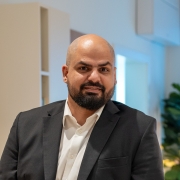
Tom Jahed, REALTOR®
Vanak Realty, North Vancouver. Ten years in North Vancouver real estate and more than 400 transactions closed, including pre-sales. Works in English and Farsi.
Before you rely on this
This is general information about British Columbia’s property transfer tax. It is not advice on a specific property, and it is not legal, tax or financial advice. Rates, thresholds and exemptions change with provincial budgets, and the government pages linked above carry their own last-updated dates.
Confirm the current position with the authority that owns it — the Property Taxation Branch, 1-888-841-0090 or pttenq@gov.bc.ca — and take advice from your own lawyer or notary before committing money or writing an offer.
Every figure here was verified against the Province’s own pages on 7 October 2026 and checked a second time. Last reviewed: October 2026.
Tom Jahed, REALTOR®, Vanak Realty, North Vancouver
North and West Vancouver · English and Farsi